Gunmen halt traffic, dump 35 bodies on busy downtown avenue in Gulf coast city in Mexico


Three women were arrested at Dubai International Airport attempting to smuggle narcotics into the country. Dubai Police's General Anti-Narcotics Department officers on duty at the airport were alerted by the suspicious behaviour of the three African women. Two of the suspects denied anything to do with narcotics despite checks to confirm the same but the third confessed she had swallowed capsules containing narcotics. A total of 2.044 kg of cocaine concealed in 184 capsules was recovered from the women.
Venezuela deported six suspected drug traffickers wanted in Colombia and the United States on Monday, touting the action as proof the government is making strides in fighting smuggling. Those deported included two accused of belonging to Colombia's largest leftist rebel group. They also included a U.S. citizen, Lionel Scott Harris, who is suspected of smuggling drugs to the United States, Asia and Europe. Harris, 67, was captured in March on Margarita Island, a popular tourist destination. Venezuela is a major hub for gangs that smuggle Colombian cocaine, and U.S. officials have accused President Hugo Chavez's government of being lax in anti-drug efforts. Last week, President Barack Obama's administration classified Venezuela as a country that has "failed demonstrably" to effectively fight drug trafficking. Justice Minister Tareck El Aissami dismissed that accusation, saying the U.S. has been spreading "pure lies" about Venezuela's counter-drug efforts. "We're winning this battle and we're going to keep winning," El Aissami told reporters at a later event Monday. El Aissami oversaw the deportations at Simon Bolivar International Airport as the handcuffed men were led to a waiting vehicle. He said that in recent years Venezuela has captured and handed over to other countries 69 drug trafficking suspects, including about 15 who have been sent to the United States. The U.S. Embassy welcomed the deportation of Harris, saying he has been wanted in the United States since 1991 for various felony charges. "We desire and hope to resume a full and cooperative relationship on counter-narcotics, which represents a threat to the U.S. as well as Venezuela," the U.S. Embassy said in an emailed statement. U.S.-Venezuelan counter-drug cooperation has been sharply scaled back since 2005, when Chavez suspended cooperation with the U.S. Drug Enforcement Administration and accused it of being a front for espionage. Besides Harris, Venezuela deported five Colombians wanted on drug-related charges: Jose Reyes Galarza, Jorge Santaella Ayala, Rubernei Vergara, Yesid Rios Suarez and Didier Rios Galindo, said El Aissami. He said Rios Suarez and Rios Galindo are guerrillas who belong to the Revolutionary Armed Forces of Colombia, or FARC. Another Colombian wanted on murder and extortion charges but not drug charges, Raul Pena Buitriago, was also deported, he said.
Veteran broadcaster Jonathan Dimbleby has admitted that he tried cocaine once and called on middle-class people dabbling in drugs to think again about the misery they are causing in south America. The host of long-running BBC Radio 4 show Any Questions? said he has a "contempt for cocaine sniffers in this country who are intelligent middle-class people but do not realise that they are fuelling a drugs war that is leading to misery for millions". He revealed he took the drug when he was in his early 20s and also tried marijuana but did not enjoy either. "I had cannabis twice in my early 20s. And once, in America [at around the same age], I did a line of cocaine. I sneezed it all over the place much to the dismay of people around who saw it as this precious substance," Dimbleby said. "It tickled my nose, and then it blocked my nose. And I had no experience from it at all." Dimbleby, 67, made his remarks in an interview with the Daily Telegraphto publicise his new BBC2 series A South American Journey with Jonathan Dimbleby. He was shocked by the effects of the cocaine trade in Colombia. "By our criminalising the use of cocaine, of people stuffing their noses with coke, we are causing mayhem to the lives of millions of people in South America," he said. He did not go as far as calling for the decriminalisation of the drug but said "we should take the matter more seriously". He added: "I think the criminalisation of drugs globally has produced far greater trouble for everyone than it if were not criminal." He said it was "ridiculous" to attack public figures such as politicians for having taken drugs when they were at university. "I think it is ridiculous to lay into adults who happen to have responsibility on the basis of what they did or didn't do at university," Dimbleby said.
The Amy Winehouse Foundation will be launched on September 14, and the late singer’s family are now hoping to channel their grief into... Washington, Sept 7 (ANI): The Amy Winehouse Foundation will be launched on September 14, and the late singer’s family are now hoping to channel their related stories Simon Cowell’s a serial cheater: ex-wife Sinitta Amy Winehouse died during detox? Amy was at her funeral: Winehouse’s dad Now, Will Smith-Marc Anthony on boys' night out! Winehouse foundation launch put on hold grief into “positive action” by providing assistance to young addicts. Amy’s father Mitch Winehouse, who has set up the charity in memory of the late singer, made the announcement on his Twitter page. “The launch of Amy’s foundation 14th September. We will turn our grief into positive action.” Contactmusic quoted Mitch as writing on his twitter page. Amy - who battled drink and drug addictions throughout her career - was found dead at her London home on July 23.
HEALTH experts are calling for more full-time drug and alcohol support services in the the north-west to reduce alarming rates of heroin overdose. The most-recent Ambulance Victoria statistics show Brimbank had the third-highest rate of heroin overdoses attended by paramedics in Victoria. In 2009-10, there were 111 overdoses during the year, compared to 87 in 2008-09. Heroin overdose attendances by paramedics were also up in Melton Shire, with 23 in 2009-10 compared to 10 in 2008-09. The Stepping Up consortium, which runs the only drug and alcohol support service in Melton, has seen about 200 people from the area since opening in January. General manager Shelley Cross said she was initially worried the four-year pilot project wouldn't reach client targets set by the Department of Health. But the service has already surpassed that target. She said the demand for additional services was strong in high-growth areas like Melton. Team leader Raymond Beacham said there was a need for more full-time services. "We're starting to see more clients come in from Caroline Springs and most of our clients use more than one substance," he said. "Melton never really had full-time drug and alcohol services until we came in and it would make it a lot easier for people to access support if there were more full-time services around." Mr Beacham said services provided education to drug users so they were more aware of what they were injecting. "Most overdoses are accidental and they often occur because drug users don't know the strength of what they are using or they're mixing substances. "People who overdose from drugs are at risk of developing brain damage and can die from it." Family members of overdose victims reflected on their loss on Overdose Awareness Day on August 31. Drug and alcohol support service providers, like Health Works in Footscray, held ceremonies to remember people who died of an overdose, as well as those who live with permanent injuries. Head of clinical services at Turning Point Alcohol and Drug Centre in Fitzroy, Dr Matthew Frei, said substance addictions could be associated with conditions like depression and required medical treatment. "There is a certain stigma attached to drug users and people who die from overdose, but we need to encourage drug users to seek treatment to reduce harm to the individual and the community," Dr Frei said.
WOMAN pal of a man jailed over a €440m drugs seizure has been caught smuggling €6,000 of heroin into his prison. The middle-aged woman was caught by prison officers last week when she arrived at the Midlands Prison for a visit to Joe Daly (44). He is serving a 25-year sentence after being convicted of possessing the biggest cocaine haul in the State's history -- a seizure of 1.5 tonnes of cocaine at Dunlough Bay in 2007. Prison staff contacted gardai, who then arrested the woman. She was brought to Portlaoise Garda Station where she was questioned by detectives before being released without charge. A file is now being prepared for the DPP. Captured Sources say if the heroin had got into the jail, it would have had a value of "well over four times" the estimated street value that gardai put on the drug. The woman was not allowed to visit English national Daly after being caught with the drugs. Daly and three other English criminals are serving lengthy jail terms for their role in the plot to smuggle €440m worth of cocaine into Ireland in July 2007. Martin Wanden (48), police- killer Perry Wharrie (51), Gerard Hagan (27) and Daly were captured after diesel, instead of petrol, was put into the fuel tanks of their boat, which was carrying the drugs off the coast of Co Cork. When the vessel capsized, 62 bales of cocaine weighing over 1.5 tonnes were thrown into stormy seas, scuppering a huge drugs operation that had been months in the planning. Liverpool criminal Hagan admitted his role in the enterprise and was jailed for 10 years. However the other three men contested the charges but were convicted after a marathon 10-week trial at Cork Circuit Criminal Court which heard from 200 witnesses. Two of the defendants claimed in direct evidence that they were entirely the victims of circumstances, coincidence and bad luck. Joe Daly said he had only gone to west Cork as a favour for his brother, who had wanted a RIB delivered. But it would later emerge that Joe Daly's brother was Michael Daly (50) -- a former Metropolitan Police detective who is now serving combined sentences totalling 29 years in a UK prison in relation to the Co Cork plot and another cocaine importation plot. Gardai believe that Joe Daly became involved in the drugs smuggling operation through his older brother, Michael. Daly presented a defence that depicted him as very much under the influence of the brother. Children Born in London to Irish parents from west Cork, Daly worked as a bricklayer with his own business, JD Bricklaying, is married with three children and lived in Bexley, Kent. It emerged that he had a number of previous convictions in the UK for offences including threatening and abusive behaviour, assaults on police officers and possessing a blade. During the trial, his uncle, Tom Lydon, told how Daly visited him on the day before the drugs seizure and watched the Munster football final between Cork and Kerry on TV. He described him as very obliging -- "the first man to come around" if anyone needed help.
One by one, motorists arrived, rolling down windows and giving up cash, as they would at a fast-food restaurant. This drive-through opened at 11 a.m. some days, but lunch was never on the menu. Instead, customers could order cocaine, oxycodone, ecstasy and marijuana. Guns, too. At a news conference Wednesday, the Hillsborough County Sheriff's Office announced that it had broken up a drug trafficking ring that caught even investigators by surprise. About 11 months ago, deputies began building cases against two men reputed to be dealing drugs in a neighborhood near University Mall. Investigators thought Zavien Brand, 28, and Joseph Nurse, 35, might lead them to a few more people, maybe six or eight, said sheriff's Maj. J.R. Burton. But the small undercover probe soon turned into a larger investigation — dubbed Operation Pandora's Box — as deputies realized the area's loose-knit group of dealers included dozens of people. On Wednesday, sheriff's officials announced they had 54 warrants and, as of 4 p.m., 32 arrests, most on drug and gun possession charges. "We had no idea this was going on," Burton said. They focused on several addresses in the neighborhood near Nebraska and Fletcher avenues. The drive-through was at the Pines I Apartments at 11720 N 14th St., deputies said. Deputies took 29 guns off the street, including seven assault rifles and two weapons believed to be linked to shootings in the area. Also seized: about 1.3 pounds of crack cocaine, 0.64 ounces of powder cocaine, 0.25 ounces of oxycodone and some ecstasy — valued at about $75,000 total, Burton said. Burton hopes the operation sends a message to an area that has long struggled with crime, and he wants residents to know that deputies aren't done. Brand was charged with dealing crack cocaine and being a felon in possession of a gun. Nurse was charged with dealing crack cocaine, marijuana and stolen property. Deputies planned to continue executing search warrants until they arrest all 54 suspects.
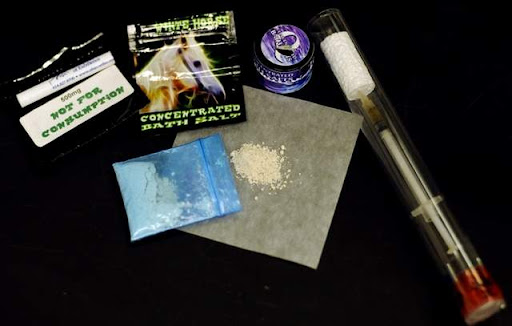 The U.S Drug Enforcement Agency's war on drugs continues with a nationwide ban of synthetic cocaine. Labeled as bath salts, the hallucinogenic drug has become more available in the Grand Junction area as part of a trend seen across the country. In response to increased emergency room visits, the federal agency has moved to emergency control these synthetic stimulants. This action makes it illegal to possess or sell Mephedrone, Methylenedioxypyrovalerone (MDPV), and Methylone or any products containing them for the next year. These chemicals are most often found in forms of 'legal ecstasy' or 'legal cocaine.' During the temporary ban, the DEA will team up with the U.S. Department of Health and Human Services to further study whether these chemicals should be permanently banned. In June, we introduced you to these bath salts in this article. Back then, they were an unregulated drug taking the place of recently banned synthetic forms of marijuana. "It is actually like a synthetic cocaine slash methamphetamine," Jim Schrant with the DEA told us at the time. "So, it's really the worst of both." The bath salts sell at a price of $40 per gram. They are mainly sold at smoke shops. But, in June, Schrant told us that his agency could not find any local dealers. Today, there are at least two. "They're putting it into packaging which is pleasing to the eye with market names of "Blue Dreams," things like that," Schrant said. "And, they're intentionally trying to target that young adult crowd." As part of this emergency control, businesses and citizens have 30 days to get rid of the banned products. At that time, the DEA will publish a Final Order in the Federal Register making the drugs Scheduled 1 substances. That category is the harshest and is reserved for unsafe, highly abused chemicals with no known medical use in the U.S. Violating that law is punishable by jail time. Employees at smoke shops in the area tell us that synthetic cocaine isn't that popular. But, local high school students have heard all about it. "I don't think they care if it's legal," Grand Junction High School freshman Hannah Rady said of some of her classmates. "Nobody does." Just like K2 and Spice, bath salts are labeled "not for human consumption." But, these students say that is not stopping anyone and neither is the law. "People just ask me 'Have you done spice before?' I'm just like, 'No,'" GJHS freshman Emilio Lazcano said. He knows Governor John Hickenlooper made those forms of synthetic marijuana illegal starting July 1, but he says fellow classmates continue to tell bother about it. "They're like 'Oh, well you're supposed to smoke it like this and that,' and I'm like 'Oh, well cool. I'm not really into that stuff.'" "They tell us that it doesn't make their eyes red, so it's way easier to bypass by your parents," GJHS junior Joe Gedscad added. The most common symptoms of these synthetic stimulants include impaired perception, reduced motor control, disorientation, extreme paranoia, and violent episodes. The DEA says the long-term physical and psychological effects are not known but potentially severe. Including Colorado, 33 states have already taken action to control or ban other synthetic stimulants. Most states pass these laws after the DEA files an emergency control on certain chemicals.
(Lance Whitney/CNET) Starting today, companies and celebrities will have a 50-day "sunrise" period allowing them to officially register under the .xxx domain and put down bids to set up shop in the Internet's red-light district. The new .xxx top-level domain is open not just to porn sites but to nonporn sites that want to block the use of their names on the .xxx domain. Florida-based ICM Registry, which is administering the launch, will work with 50 individual registrars around the world to handle the actual registrations. After the expiration of the sunrise period, a 17 day "land rush" period will open, allowing adult sites to register for whatever .xxxx addresses are still available. After that, applications will be reviewed individually on a first come basis.
Authorities in Panama say they have broken up a major cocaine trafficking organization that moved drugs from Colombia to Panama and then north to Mexico and the United States. Panama's Drug Prosecutor Javier Caraballo says 80 Panamanians and Colombians were arrested Monday in simultaneous raids across the Central American country. Caraballo says the group moved at least 18 tons of cocaine in the last two years mainly through the Caribbean and was led by alleged Colombian drug trafficker Jorge Indalecio Marmolejo. Caraballo said Tuesday the group distributed cocaine from gangs linked to the Revolutionary Armed Forces of Colombia, or FARC. Drug gangs are increasingly using Central America to ship drugs and launder money.
 Amy Winehouse's fortune was worth just over £2 million when she died. Although the late singer made The Sunday Times Rich List in 2008 with an estimated fortune of £10 million, the accounts for two companies she owned that were published yesterday suggested her financial value had decreased in the last several years. The figures showed that Winehouse’s Cherry Westfield company was worth £2,004,963 at the end of last November, which is £20,000 less than it was valued at in 2009. Her CW Touring company, meanwhile, dropped in value from £142,012 to £8,032 during the same period. Amy Winehouse’s ‘Back To Black’ becomes UK’s biggest-selling album of the 21st centuryMark Ronson toasts Amy Winehouse at his weddingDrug overdose ruled out as cause of Amy Winehouse's death According to The Daily Star, a source close to Winehouse claimed that she had spent thousands of pounds on drink and drugs. They said: Even though Amy spent thousands on drink, drugs and hangers-on, she was still a rich young woman. Had she beaten her issues with drink, she would almost certainly have lived a worry-free and comfortable life. It is sad that having beaten drugs, she never got a chance to enjoy the money she worked so hard to produce.
Roman Catholic priest charged with sexually abusing two boys in the 1970s told the Archdiocese of Louisville in 1985 that he was a sexual addict, but church officials put him in treatment instead of removing him because they believed he was involved with men, not boys, according to court records released Tuesday.
In addition, the Rev. James R. Schook admitted to church officials in the mid-1990s that he had given a man money in exchange for sex, according to the records. The archdiocese referred him to a counselor.
Schook was removed from the ministry last year by the archdiocese after several men complained that they were abused by Schook when they were teenagers in the 1970s.
He now faces three counts of sodomy in the second degree and four counts of sodomy in the third degree in Jefferson Circuit Court. Six of the charges involve incidents with a boy from 1971 to 1974. The seventh involves an incident with a second boy between 1974 to 1975.
He has pleaded not guilty, and his attorney, David Lambertus, declined to comment.
He remains a priest but has been forbidden to do public ministry or present himself as a priest.
Brian Reynolds, chancellor and chief administrative officer of the archdiocese, said Tuesday that Schook’s confession three decades ago about his sexual addiction was not enough to remove him from ministry then because there were no claims of illegal activity.
He also said there had been no complaints about sexual abuse of children nor any other allegations after Schook finished his treatment — until 2009.
Schook’s sexual encounters with men became known after he had two car wrecks in late 1985 and later entered a residential treatment program at Our Lady of Peace, according to the archdiocese records.
Reynolds told police in a 2009 interview that Schook received counseling and treatment that included a 12-step sexual addiction program.
According to court records, a former Trinity student said he told a counselor at the high school in 1985 that he had been abused by Schook while on a camping trip. The former student also said he told the counselor, who is not named in the records, about other teens who were abused.
The singer claimed she used booze to help her write songs when she was younger as she thought it would make her more 'honest'. She told The Sun: 'I used to have to lock myself away in my house, get pretty drunk and write a drunk diary - and that was the first time I could admit things to myself. 'A drunk tongue is an honest one in my opinion and the next morning I would read it through with an awful hangover and, in the cold light of day, had to absorb my feelings about myself. 'I was a bit scared that I wouldn't be articulate enough.' She has previously admitted that her second album 21, was inspired by an intense and brief affair. Adele added: 'When I was 18 or 19 I didn't regret anything, I was very much a teenager and thought I knew it all and that there was nothing else I could learn. 'I started realising my own flaws and my disappointments and I started regretting a lot of stuff. It was quite an awakening.' The singer also revealed that one of her tracks was turned down for the soundtrack to Jake Gyllenhaal's film Love And Other Drugs. But the star wasn't letting rejection getting her down - she still harboured ambitions of one day writing the soundtrack for a Martin Scorsese film.ADELE has revealed that she used to write a 'drunk diary' after hitting the bottle which helped her to pen the lyrics to her best-selling album 21.

“Could rehab have saved Amy Winehouse?”, Patti Davis eloquently sums up what I tried to get across in two posts.
The truth is, overcoming an addiction is a solitary journey whether you drive through the gates of the best facility or sit in your room alone staring into the cavern in your soul you’ve tried so hard to run away from. Rehab can give you tools, but you walk the road alone. And as all of us who have made our way out of addiction will tell you, part of it was luck. There simply is no formula that can guarantee a way out, no trail of bread crumbs leading out of the forest. You grab onto something inside you, some part of you that has decided to live without the poisons you love so much, and you hope like hell you can hold on.
We still don’t know whether Winehouse took an overdose of drugs or a lethal combination or bad drugs (or none of the above), but her demons were visible for a long time. Those of us who have experienced the treacherous landscape of addiction and have lived to talk about it have known nights when we teetered on a dangerous boundary line. We held on and made it through. We got lucky. Others who tried just as hard couldn’t hold on - and faded to black.
She’s right.
Part of what drew me into the Amy Winehouse story, as with any story of addiction, was the “there but for the grace of God…” factor. Even with 19 years of recovery, I don’t consider myself much different from her or from other addicts who still using or just didn’t make it. If there are any differences, maybe it’s that I made different choices at some points, and maybe I just got lucky at other points.
What choices? Well, obviously I chose to quit and to work a recovery program. I grew up with the Len Bias story, so I was scared to death of heroin and cocaine. My main drug of choice was alcohol, which was hard enough to quit in and of itself. I now know that, given my predisposition to addiction, I’m almost certain I’d have become addicted to them if I’d tried them.
What luck? I went into recovery relatively early in my drinking “career.” I’ve also been blessed with a “spidey sense” or intuition that tells me when I’m close to getting into trouble I can’t get out of, or when a sitaution is about to become unstable or dangerous giving me enough time to get out of the situation or change course before things head seriously downhill. I was lucky that when I was ready for recovery, there was a college-based AA group literally steps from my front door.
Maybe I was just lucky enough to find a recovery program that equipped me to deal with the issues driving the addiction.
A preliminary autopsy has yet to determine what caused Winehouse’s death, but regardless, Prentiss thinks that the singer never received the kind of treatment she needed for her very public struggles with addiction. He maintains that the centers she attended were focused on getting Winehouse clean instead of dealing with her motivation for turning to drugs and alcohol in the first place.
“I believe she was dealing with deep psychological pain,” [Pax Prentiss, the co-founder of Passages, the California rehabilitation center] told TheWrap. “To get her sober and keep her sober rather than treat her for alcoholism, you have to go to the root cause. The drinking and the drugs are a symptom of deeper problems.”
…“I don’t know what Amy’s issues were, but I do know from experience that artists have a tendency to be sensitive,” Prentiss said. “they’re talented yes, but the outside world effects them differently and they’re prone to turn to drugs in order to cope with the pressures put upon them.
“I think Amy had an image that she was a tough rock ‘n’ roll girl, but she was delicate, sensitive and she needed help,” he added.
My experience is addiction is really the way that addicts cope with things — things that are emotionally or psychologically difficult or painful — that other people learn to cope with in other, perhaps healthier ways. When I started recovery, someone told me that “mentally, emotionally, an addict is really stuck at whatever age they were when they started using.” In general, addicts stop growing or maturing emotionally at the point where addiction takes over, because that the point at which they stop learning how to cope with whatever is too difficult, painful or stressful to deal with in their lives. Addiction takes the place of coping. That’s why it’s never enough to “just stop.” That’s why I think most recovery programs are basically about addicts learning how to cope without drugs, alcohol, etc.
After 19 years, I can’t tell you “how I did it,” except for pretty much the same thing that Davis wote. Even with a recovery program to help me, there were times when I’ve had to “white knuckle it” I still can’t tell anyone else “How to do it,” except that they’re probably going to need help.
And, they have to want it. Otherwise, it won’t happen. It’s hard enough that no one’s going to do it if they don’t want it.
From all appearances, Amy didn’t seem to want it. But we’ll never know whether some small part of her did but wasn’t strong enough, of whether she didn’t want it until it was too late.
Wanting it, of course, is no guarantee. There are plenty who want it, and try over and over again without success. But wanting it at least give you something that nothing else will: a shot at actually getting better
 Singer Amy Winehouse, who died in London on Saturday, has joined a tragic group of famous rock stars who passed away at the age of 27 — the notorious “27 Club.”
Rolling Stones founding member Brian Jones, guitarist Jimi Hendrix, singer Janis Joplin, The Doors singer Jim Morrison and Nirvana frontman are the other major “members” of the ill-fated club.
The first to die was Jones, who left the Stones after disagreements with other members. He had problems with drugs and alcohol.
Jones drowned in the swimming pool of his estate in Sussex, southern England, in July 1969, and his body was found by his girlfriend. An inquest recorded a verdict of death by misadventure but speculation has continued that he was murdered.
Hendrix, the pioneering U.S. guitar wizard whose whose hits included “Purple Haze” and “Hey Joe,” followed one year later.
Hendrix choked on his own vomit in a hotel in London on Sept. 18, 1970, after swallowing sleeping pills and drinking red wine.
Less than a month later, on Oct. 4, 1970, Joplin was dead at the same age.
Known for her bluesy vocal style, the U.S. singer died of a suspected heroin overdose. Her album Pearl was released posthumously and became her biggest seller.
In 1971 Morrison became the next to perish. The U.S. singer of the hits “Light My Fire” and the brooding masterpiece “The End” died in his bathtub in his Paris flat on July 3, 1971, alcoholic and obese.
The cause of The Lizard King’s death was a suspected heart attack — but there was never an autopsy, giving rise to multiple conspiracy theories.
Meanwhile Cobain, who died in early April 1994, had his own well-documented struggles with heroin during his brief career with U.S. grunge rockers Nirvana.
But it was not drugs that claimed his life, but his own hand.
Just weeks after taking an overdose of tranquilizers in Rome, Cobain, who was married to troubled rocker Courtney Love and best known for the hit “Smells Like Teen Spirit,” killed himself with a shotgun at his house in Seattle.
Afterwards his mother Wendy was quoted as saying: “Now he’s gone and joined that stupid club, I told him not to join that stupid club.”
A host of other, lesser known musicians also died at the same age.
The keyboardist for legendary rockers the Grateful Dead, Roger “Pigpen” McKernan died of a haemorrhage brought on by alcoholism in March 1973.
And Richey Edwards, the guitarist and lyricist of the Welsh alternative rock band Manic Street Preachers, disappeared in February 1995 after spiralling into depression.
His car was found abandoned near a notorious suicide spot and he was officially pronounced dead in 2008.
A form of flesh-eating cocaine has afflicted drug users in New York and Los Angeles, causing purple areas of dying flesh.
Cocaine that has been cut with the veterinary drug levamisole appears to be the cause of a grotesque disease that causes patches of dead skin on the ears, noses and cheeks of victims. How revolting! Outbreaks due to flesh-eating cocaine have been reported in both New York and Los Angeles, and according to Dr. Noah Craft of the Los Angeles Biomedical Research Institute, the problem is likely much more widespread. Cocaine may be popular among celebrities and stars, but patches of rotting flesh are not especially attractive.
Dealers commonly cut cocaine with various substances such as baking soda before it is sold to end users, and South American drug cartels are apparently favoring the use of lavamisole for this purpose. Levamisole is a veterinary drug that is used to kill worms in pigs, sheep and cattle. It seems strange that anyone would choose this to mix with cocaine, since baking soda would be much cheaper and easier. However, some research shows that levamisole has an effect on brain receptors similar to that of cocaine, so maybe they figure it will give the cocaine an extra kick.
Although it doesn't seem to affect everyone in the same way, recreational drug users should beware: You never know what is going up your nose, and it could have dire consequences.
And now we know how it all started.
In a new interview, Aaron Carter briefly but shockingly opens up about his friendship with musical legend Michael Jackson. He's never spoken much about the man and mentor he knew as a young man, but he reveals that MJ introduced him to not only good music, but also drugs and alcohol.
When asked if Michael had ever given him alcohol, Aaron siad:
"I never talked about it… This is the first time. I do… I miss Michael… I have spent such incredible times with him. I did things with him that nobody else did… But I was also troubled about what he did to me … Yes, he gave me wine. I mean, I could have refused, but I was 15."
When he was pressed further for more information, Aaron dropped this bomb:
"He gave me cocaine. I felt weird about that and other stuff… We spoke afterwards, hours and hours, on the phone. I admired Michael, but his behaviour bothered me a lot. Then my mother called the police…"
Cocaine?! At 15?! Too young! Much, much, much too young!
We're kind of at a loss for words. MJ should have known better, that is for sure, but he's no longer here to defend himself, so we don't know what to believe. Still, its not hard to believe…
 Two months after being arrested for possession of cocaine, oil heir Brandon Davis has pleaded guilty to the charge in a Los Angeles court.
The 31-year-old was arrested by police outside Beacher's Madhouse at the Roosevelt Hotel in Hollywood on April 28 after reportedly punching comedian Ben Gleib.
When police searched Davis they found cocaine in his trouser pocket and immediately took him into custody.
Oil heir Brandon Davis brokered the Petra Ecclestone $150m mansion deal 'on same night he was arrested for drug possession'
He was later released on $10,000 bail and this morning pled guilty to the possession of a controlled substance and no-contest to the battery charge.
The judge ordered him to enter a drug diversion program, which, if he completes it will result in both charges being dropped entirely.
Brandon, who once dated Mischa Barton, is known for his friendships with several celebrities, including Nicole Richie and Paris Hilton - who he was with on the night he was arrested.
The young heir was also recently responsible for brokering the sale of Candy Spelling's Bel Air mega-mansion which Petra Ecclestone bought for a staggering $85 million in cash last month.
Brandon was reportedly partying with Petra, 22, when she told him she wanted to buy a big house in Los Angeles so hi put her in touch with real estate hot shot - and Paris Hilton's father - Rick Hilton.
For his part in arranging the deal he received a $250,000 finders fee.
As with so many other things, John Lennon may have said it best: “Curse Sir Walter Raleigh, he was such a stupid git.” Of course, that lyric, from the Beatles song “So Tired,” comes after he says, “I’m so tired, I’m feeling so upset…Although I’m so tired, I’ll have another cigarette.”
As much as Lennon might have cursed Raleigh, the Englishman who brought tobacco smoking from the New World to Europe, he still wanted another smoke. And he probably looked pretty cool dragging from it, too, conveying desperation as he inhaled deeply and world-weary satisfaction as he exhaled a cloud of carcinogen-filled smoke.
This morning, the Food and Drug Administration unveiled a series of often graphic images that will be plastered on cigarette packages, above the brand and the outside of the box. They include a man exhaling smoke through a tracheotomy hole in his neck and a mouth ravaged by oral cancer.. Tobacco companies R. J. Reynolds, Lorillard and Commonwealth Brands told the FDA that the warnings are “intended to elicit loathing, disgust, and repulsion” despite the fact that their products are legal.
Of course that’s what the new warnings are supposed to do, and they have to if they’re going to combat years of built up cultural encouragement about smoking. Smoking — an addictive, deadly behavior that lines the coffers of companies that do little if any good for the world — somehow persists as a pose of rebellion. That persisted from James Dean to Joe Strummer to Kurt Cobain.
In 1965, when the Surgeon General’s first report on smoking was issued, 42% of Americans smoked. Warnings and public education cut that in half, but the percentage of Americans who smoke has stalled at 21%, meaning 47 million Americans smoke cigarettes. Of those who don’t quit, half will die of smoking related illnesses including lung cancer and heart disease. One in five deaths is caused by smoking, including a third of cancer deaths.
The realization that a common behavior that had actually been touted by its manufacturers as doctor-recommended was killing people in large numbers represented a turning point for medicine. At around the same time, the FDA’s power to regulate drugs was being strengthened to include not just rudimentary proof of safety, but also proof of efficacy. It’s shocking to think it, but randomized controlled clinical trials, the gold standard for medical research in which patients are assigned at random to achieve one of two treatments, were still brand new. The first, of streptomycin in tuberculosis, was published in 1948.
Traditionally, scientists what was causing a clear and undeniable case of illness — like cholera. The classic case study of epidemiology, chronicled in Steven Johnson’s book The Ghost Map, was John Snow’s realization that a cholera outbreak was caused by contaminated water. But in this new world, collecting data became a way to figure out if people were sick. To this we owe a the creation of powerful cholesterol and blood-pressure drugs that combat heart disease, and also the dawning realization that some medicines, like Vioxx, Avandia, and Baycol carried their own risks.
But this revolution has had its limits. Drugs to prevent smoking like Zyban and Chantix, for instance, have been shown by randomized controlled clinical trials to not be that effective. With computing power increasing at an amazing pace and more and more data moving to the cloud, it should be easier to pick up these otherwise invisible trends and improve public health. Except that we don’t have standardized electronic health records, and don’t seem sure of a way to accumulate or manage them. Why would we? 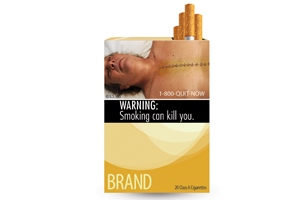

Healthy modern home based human exploration and adventure based recovery program on this planet and it is available to you. THE TEN STAGES...

 Greatest human exploration and adventure based recovery study program on this planet and it is available to you.
 Dry January 2018 Weight loss and sleep better after alcohol-free month | Health | Life & Style | Express.co.uk
Fresh hope in pancreatic cancer war
Fewer Young Adults Seek Help For Cocaine And Crack Use
An unflinching look at drugs


